

Call for Proposals
The Great Lakes Fishery Commission is now accepting pre-proposals for the 2028 funding cycle for the Fishery Research Program and Sea Lamprey Research Program. The Commission's research programs consist of a portfolio of funded basic and applied research organized by designated theme areas.
Pre-proposals and pilot proposals are encouraged to be cross-cutting and address multiple themes or integrate multiple disciplines. Review the theme papers (Sea Lamprey Themes; Fishery Themes) or associated research priorities (Sea Lamprey Control Board Research Priorities; Fishery Research Priorities) to help inform project development and relevance.
The Great Lakes Fishery Commission also supports the submission of pre-proposals investigating fishery management and sea lamprey control issues that have been identified as important to Indigenous Peoples around the Great Lakes, see "Special Topics" for more information on priority research needs. Pre-proposals covering these topics are expected to be Indigenous-led or have Indigenous partners fully engaged at all stages of the project from proposal development to project completion.
See below for more information about the upcoming webinar and office hours.
Explore examples of successfully funded projects in the commission's Project Catalogue.
Pre-proposal deadline: JANUARY 15, 2027, 11:59 PM EST
Special Topics
In addition to the research needs highlighted in the theme areas (Sea Lamprey Themes; Fishery Themes), the Great Lakes Fishery Commission invites proposals on these special topics for the 2027 funding cycle:
Fishery Research Program
- Indigenous-led research
-
The Indigenous Great Lakes Network identified ecosystem conservation and protection, data and technology, contaminants, environmental restoration and reclamation, ecosystem monitoring and protection, fish research and management, and effects of mining as priority areas of research.
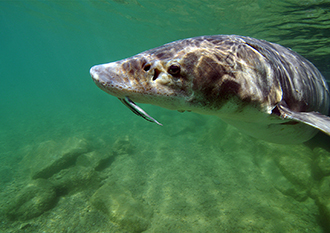
In response to these needs, and in the broader context of issues important to Indigenous communities, we seek Indigenous-led research proposals on stewardship of fish populations that include Indigenous knowledges and that enhance community capacity. Specifically, we are looking to fund projects with a focus on cultural keystone species. We strongly encourage management/stewardship—Indigenous community partnerships and knowledge co-production among Nations and Tribes. Methods may include, but are not limited to, case study evaluations, 'learning by doing', co-production of knowledge that informs adaptive management actions, and other action-oriented collaborative efforts.
-
- Effects of emerging contaminants and pollutants on fishes of the Great Lakes
Multiple emerging contaminants and sources of pollution have been identified in the Great Lakes and could have negative effects on fishes. In particular, and consistent with the International Joint Commission (IJC)'s Great Lakes Science Advisory Board's report "Monitoring, Ecological Risk Assessment, and Management of Microplastics in the Laurentian Great Lakes," the Great Lakes Fishery Commission is making funds available for research to strengthen ecological risk assessments of microplastics pollution, with a focus on effects to fish and fisheries. Proposed studies should use IJC Standard Operating Procedures for sample collection and standardized methods for microplastics analysis. Specifically, research focused on the following topics is invited:
-
Microplastics exposure and direct effects of microplastics on fish health
Identify sources and occurrence of microplastics within and across the Great Lakes.
Characterize how microplastics move through the environment and identify the importance of ways fish are exposed to microplastics.
-
Improve understanding of microplastic toxicity (e.g., acute, chronic, reproductive, or developmental effects) in species relevant to the Great Lakes watershed.
-
How does microplastic exposure affect fish health, disease susceptibility, or other non-lethal effects?
-
-
Improvement in monitoring and analytical capabilities for better detection and characterization of microplastics
- Can rapid testing methods and high-throughput methods for microplastics detection and quantification in fish be developed?
-
Sea Lamprey Research Program
- Effects of extreme weather on sea lamprey control
-
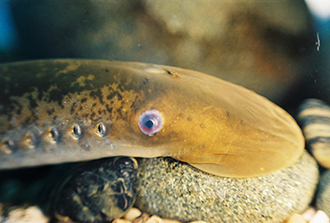
The Sea Lamprey Control Board is concerned about the potential effects of extreme weather on lampricide treatments and barrier efficacy. Understanding how sea lamprey control is affected by changing environmental conditions is critical for developing an adaptable program that maintains effectiveness under future scenarios. Effects of interest include, but are not limited to:
Varying treatment effectiveness under changing water temperature and more extreme future fluctuations in stream discharge and diel pH cycles;
Increasing treatment frequency and associated program costs related to changes in larval growth rates due to changes in temperature;
Uncertainty around sea lamprey barrier effectiveness and performance under varying stream discharge and other physical stream conditions, and more frequent extreme precipitation events.
-
- Population level effects of lampricides on non-target organisms
-
The Sea Lamprey Control Program is committed to understanding and monitoring the effects of lampricides on non-target organisms. Previous research has not identified population level effects on non-target organisms outside of native lampreys, but efforts have not been exhaustive. The Sea Lamprey Control Program seeks to build on previous research to further understand how lampricides affect non-target organisms, both at the individual and population level within streams. Additional research in this area would help further our understanding of how non-target species respond and recover from lampricide exposure and would inform treatment protocols to minimize negative effects of lampricides on aquatic biota. Key documents to reference include Kaye 2021, Pratt et al. 2021 and Neave et al..
Organisms of concern include, but are not limited to, mudpuppies, native lampreys, native mussels, aquatic insects (e.g., Hexagenia), aquatic vegetation, culturally significant species, and any state/provincial or federally listed aquatic species.
-
- Improved understanding of granular Bayluscide® effectiveness
Granular Bayluscide (gB) is used for sea lamprey assessment and treatment as a cost-effective alternative to TFM that is used in large rivers and lentic areas around river mouths where the necessary quantities of TFM are prohibitively expensive. Currently, the program operates under the assumption that the mean effectiveness during a gB application is 75% (Fodale et al. 2003; Sullivan et al. 2021) but effectiveness can be highly variable. The effects of pH, alkalinity, and temperature on gB effectiveness are relatively well understood, but more research is desired on the influence and interaction of abiotic and biotic variables, including sediment types, water velocity and turbulence, depth, and vegetation.
- Human dimensions of sea lamprey control
The Sea Lamprey Control Program seeks targeted research within the field of human dimensions to investigate the social, cultural, and economic factors influencing public perceptions of sea lamprey control. This research would provide the Sea Lamprey Control Program with information to better understand public risk perceptions, improve community engagement, and enhance program delivery. Proposals are encouraged to address one or more of the following areas:
Risk Perception
Identify, map, and analyze typologies of public and rightsholder perception and risk-attitudes regarding sea lamprey management tools.
Conflicting Values
Develop frameworks to understand how different stakeholder and rightsholder groups (e.g., recreational anglers, waterfront property owners, kayakers, environmental NGOs) prioritize competing conservation goals.
Analyze the socio-ecological friction between public perceptions for river restoration (dam removal) and the need for fragmentation associated with sea lamprey barriers (i.e., the connectivity conundrum).
Institutional Trust, Sovereignty, and Communication
Analyze how institutional trust, Indigenous sovereignty, and scientific consensus shape community views of sea lamprey control.
Evaluate how different perception typologies interpret current control agent (i.e., Fisheries and Oceans Canada, U.S. Fish and Wildlife Service) communication materials.
Design evidence-based messaging strategies and tailored communication frameworks to manage local issues during active management windows.
- Download the pre-proposal instructions and template.
- Pre-proposals are submitted through the online proposal system.
- Deadline: JANUARY 15, 2027 11:59 PM EST - to be considered for funding at the March research board meeting
- Download the pilot proposal template.
- Pilot proposals are accepted twice a year.
- Pilot proposals and additional documents must be submitted to the Box submission folder
- All files must be submitted using the naming convention: "PI Last Name_File Name"
- Deadline: JANUARY 15, 2027 11:59 PM EST - to be considered for funding at the March research board meeting
- Deadline: JULY 15, 2027 11:59 PM EST - be considered for funding at the September research board meeting.
- Pre-proposals are evaluated for research excellence, which should be demonstrated throughout the proposal, across the following areas: (1) Relevance, (2) Novelty, (3) Feasibility, and (4) Responsible and ethical conduct of research.
- Resubmissions must also submit a Letter of Response which will be evaluated.
- Successful pre-proposals will be advanced to full proposals; review last year's template* and the peer-review evaluation guidefor additional evaluation criteria.
- Relevance: Pre-proposals are evaluated for relevance and against information needs identified by the Research Themes under which they are submitted, and the research needs identified by the Sea Lamprey Control Board and Council of Lake Committees. Review the theme papers (Sea Lamprey Themes; Fishery Themes) or associated research priorities (Sea Lamprey Control Board Research Priorities; Fishery Research Priorities). Pre-proposals submitted under non-theme will be evaluated for their relevance to the commission's Strategic Vision.
- Novelty: Pre-proposals should clearly demonstrate how the proposed research is innovative, breaking new ground, or is building on past work, which will generate critical information to the commission’s programs.
- Feasibility: Methods should clearly demonstrate how the work is achievable given the proposed methods, timeline, and budget.
- Responsible and ethical conduct of research. Pre-proposals should demonstrate how the research will be conducted in a responsible and ethical way. Investigators should consider how their project (1) uses an interdisciplinary team approach and involves all team members in project implementation; (2) includes methods that are ethical, collaborative, and use participatory approaches; (3) fosters training and leadership development for all team members; and (4) ensures that results and deliverables will reach appropriate audiences.
- Letter of Response (if applicable): Investigators resubmitting a pre-proposal should demonstrate how they addressed board and/or reviewer feedback provided for the previous submission in both the pre-proposal and letter of response.
- New and early career investigators: Pre-proposals from new and early career investigators are evaluated against the same criteria and compete for the same funding as established investigators; however, bringing new and early career investigators into the programs is a high priority. To the extent possible, new investigators are provided opportunities to engage with the research board to further develop submissions. Review the new and early career investigator criteria to determine if you are eligible. New and early career investigators are strongly encouraged to reach out to the Science Director at research@glfc.org in advance of a pre-proposal submission.
- January 15 - Pre-proposals due to the online portal. Pilot proposals and additional documents due to the submission folder.
- Early March - Pre-proposals and pilot proposals reviewed by the Board of Technical Experts (FRP) and Sea Lamprey Research Board (SLRP). New investigators may be invited to give a virtual presentation to the board if it is their first time submitting the idea to the research program.
- March 31 - Investigators notified of decision. Authors of successful pre-proposals are requested to develop a full proposal. Investigators notified of spring pilot proposal funding decisions.
- June 01 - Full proposals due from successful pre-proposals.
- July 15 - Pilot proposals and additional documents due to the submission folder.
- Mid-September - Full proposals and pilot proposals reviewed by the Board of Technical Experts (FRP) and Sea Lamprey Research Board (SLRP).
- September 30 - Investigators notified of board recommendations. Recommended proposals are requested to submit a letter of response to board comments. Investigators notified of fall pilot proposal funding decisions.
- December - Investigators notified of commission funding decisions.
- Investigators may explore examples of successfully funded projects in the Commission's Project Catalogue.
- Visit Resources for Researchers for information on additional support from partnering facilities and organizations.
- Watch previous informational webinars to learn more about the research needs and funding process:
- Fishery Research Program: https://youtu.be/amh9ryh_2U0
- Sea Lamprey Research Program: https://www.youtube.com/watch?v=2FS1H6u31kU
- Developing a successful research proposal: https://www.youtube.com/watch?v=ppD3r8x3EKw
- Contact the Science Director at research@glfc.org for questions about the research programs or research ideas.
Webinar
Interested applicants are encouraged to join the informational webinar to learn more about research needs of the Commission and its partners and the research funding process. Webinars will provide interested investigators program-specific information regarding the annual funding cycle and timelines, proposal preparation, submission, and review processes, and will include opportunities to address questions. Webinars will be recorded and available online.
Monday, October 19, 2026, at 12:30 PM EST
Virtual Q/A Sessions with Commission staff and research board members
Looking for additional opportunities to ask questions about our programs or a specific research question? Investigators can book "office hours" to meet with staff and members of the Sea Lamprey Research Board or Board of Technical Experts to discuss research ideas. Twenty-minute Q/A sessions will be available on two upcoming dates:
November 3, 2026, from 9:00 AM - 12:00 PM EST
November 4, 2026, from 9:00 PM - 10:00 AM EST; 12:00 PM – 3:00 PM EST
November 5, 2026, from 12:00 – 4:00 PM EST
Eligibility
Awards for multi-year projects are typically between $35,000 and $150,000 per year for projects beginning no earlier than January 1, 2028.
Pilot proposal awards must be less than or equal to $20,000 USD and up to one year in length.
Awards are available to academic institutions, Indigenous communities and organizations, government agencies, and private corporations through research contracts.
Post-docs and students may not be Principal Investigators on proposals unless the PI's institution has its own accountability policy as outlined in the commission's PI eligibility policy. Post-docs and students can be recognized as co-PIs.
Review the full description of our pre-award policies.
Submission
Pre-proposal
Pilot proposal
Evaluation
Review Process & Timeline
Additional Resources
If you would like to be notified of future calls for proposals please subscribe to our call for proposals list.